Gentle ELA for Reluctant Learners
A Low-Pressure Short Story Unit for Homeschool
If Language Arts regularly ends in shutdowns, frustration, or power struggles, you’re not doing anything wrong – and neither is your teen.
For many homeschool families (especially with neurodivergent or reluctant learners), traditional ELA asks for too much, too fast, in too many directions at once. The result isn’t better learning – it’s overwhelm.
This post shares a gentle ELA approach that helps teens engage with short stories without feeling trapped by busywork. I’ll also explain why the short story “Thank You, M’am” by Langston Hughes works especially well for reluctant readers – and how to use it without turning literature into a battle.
Why Traditional ELA Often Doesn’t Work for Reluctant or Neurodivergent Teens
Many short story unit studies are built around coverage, not clarity.
They often stack:
- comprehension questions
- vocabulary lists
- literary device worksheets
- written responses
- creative projects
- discussion prompts
Even if each piece looks reasonable, together they create decision fatigue and pressure – especially for teens who struggle with executive function, anxiety, perfectionism, or school trauma.
When everything feels required, students don’t “try harder.” They shut down.
A Gentle Homeschool ELA Strategy: One Clear Task
In our homeschool, ELA got easier when I stopped asking, “Can you do all of this?” and started asking:
What is the one thing I actually want you to understand today?
Instead of multiple assignments, we focus on:
- one clear task
- one choice about how to respond
- clear permission to stop once it’s done
Understanding the approach is one thing. Having it structured, worded, and ready to hand to your student is another — and that’s what makes this feel doable on real-life days.
About “Thank You, M’am”
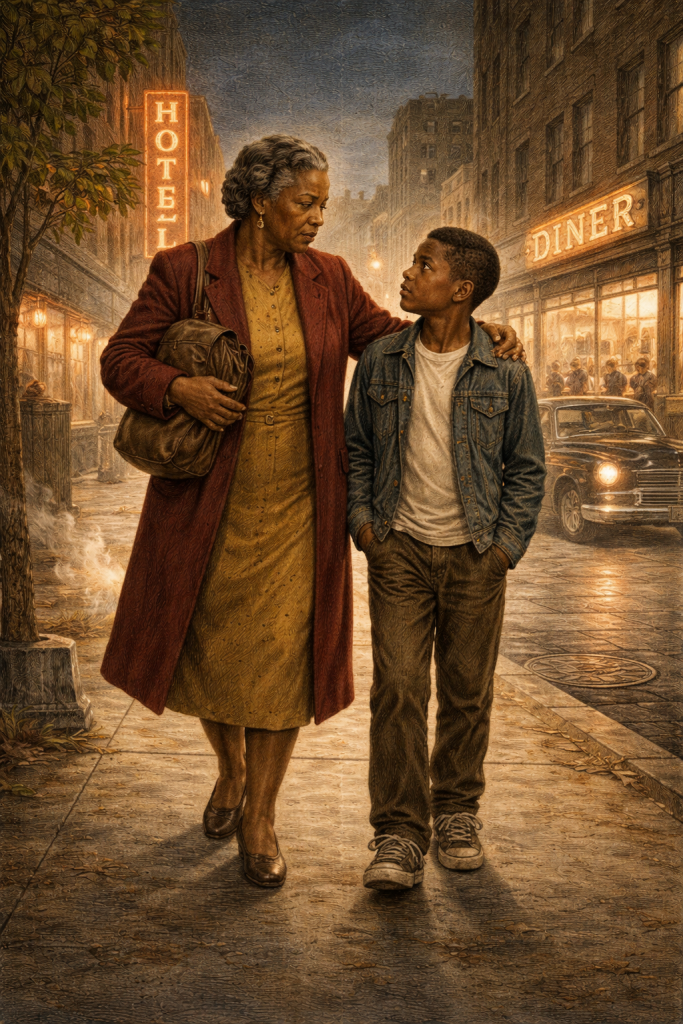
Thank You, M’am is a brief but powerful short story about a chance encounter between an adult woman and a teenage boy – and how compassion, dignity, and trust can change the course of a moment.
Rather than relying on dramatic twists or complex language, the story focuses on human connection. Its themes are accessible and deeply relevant for students, including:
- empathy and understanding
- second chances
- accountability without shame
- being seen instead of punished
Because the story is short, grounded, and emotionally clear, it works especially well for:
- reluctant readers
- neurodivergent students
- middle school and early high school learners
- students who shut down with longer or more abstract texts
Thank You, M’am invites discussion naturally – without requiring heavy literary stamina – making it an excellent choice for gentle, low-pressure ELA study.
*You may notice that we use the spelling “m’am” rather than the more commonly seen “ma’am.”
This spelling reflects Langston Hughes’s original title and published text. I chose to keep “m’am” in order to honor the author’s work and remain faithful to the original language of the story.
Both spellings are correct in modern usage, but preserving the original title is an intentional choice grounded in literary accuracy.
Why “Thank You, M’am” Works for Reluctant Readers
“Thank You, M’am” is one of my favorite short stories for middle school and early high school homeschool because it’s short, grounded, and deeply human.
It naturally brings up themes teens intuitively understand:
- dignity
- trust
- second chances
- being seen instead of punished
You don’t have to force “meaning.” The story carries it.
That’s exactly what reluctant readers need: a story that invites connection without requiring heavy academic stamina to access it.
You’re Not Lowering Standards – You’re Removing Barriers
Gentle academics doesn’t mean “easy” or “lazy.”
It means removing the noise that prevents thinking from happening in the first place.
When teens feel capable and respected, deeper discussion and analysis becomes possible – naturally, not through force.
A Ready-To-Use “Thank You, M’am” Unit Study (Printable PDF)
If this approach fits your homeschool, I created a printable unit study for “Thank You, M’am” built with this exact structure:
- one clear task per session
- multiple response formats
- permission to stop when done
It’s designed for:
- homeschool families
- neurodivergent learners
- reluctant readers
- parents who want literature without daily battles
Final Thought
If ELA has felt heavy, it doesn’t mean your teen can’t handle literature.
Often, it just means the structure needs to change.
Sometimes the most effective thing we can do is ask less – more intentionally.